























A major datacentre project backed by the UK government will miss its planned launch next year and could face delays until the mid-2030s because of problems securing enough power.
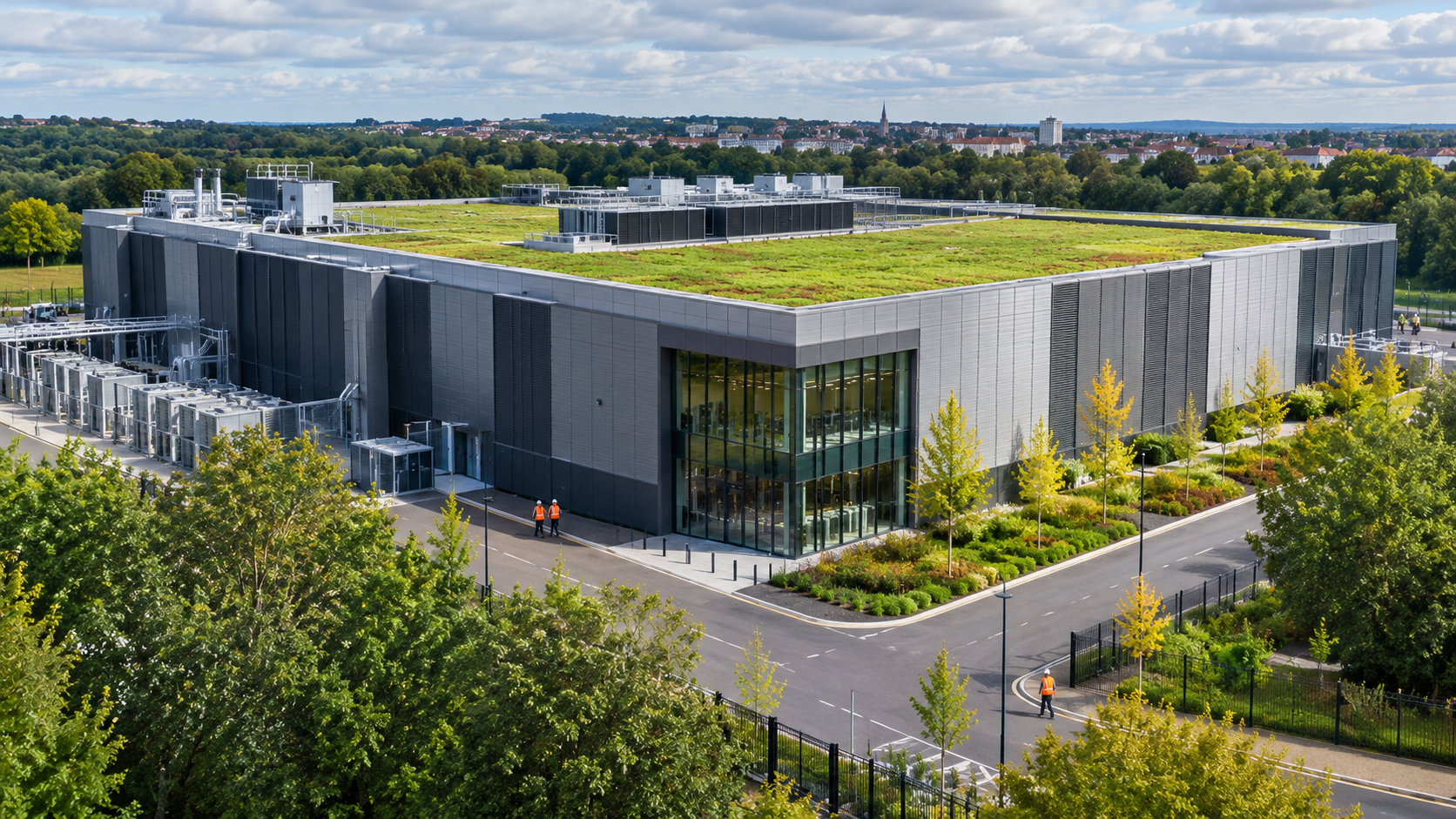
The site in Loughton, Essex, was described as the UK’s largest AI supercomputer when the project was announced in 2025. However, difficulties obtaining a sufficient electricity supply mean the facility now faces a potentially lengthy delay before it can become operational.
Concerns over the project had already emerged after reports in March revealed that the proposed location was still being used as an operational scaffolding yard. The site has since been cleared by Nscale, the company developing the project.
Further uncertainty has now emerged because the project has been unable to secure enough power ahead of its planned 2027 launch. The Loughton supercomputer is being developed by Nscale, a UK-based startup that is seeking a $35bn (£26bn) flotation this year.
UK Power Networks (UKPN), which is responsible for connecting the facility to the local electricity distribution network, has reportedly told Nscale that the grid may not be able to provide sufficient capacity for the datacentre until the early to mid-2030s.
The power supply delay was first reported by Morning Intelligence, an AI industry newsletter.
Nscale said it remained “committed to the project”, but the difficulty in finding a rapid solution to the electricity supply problem highlights the growing importance of energy availability to datacentre development. The company is also investigating whether it can generate electricity onsite and whether the grid connection process can be accelerated.
The Loughton project was highlighted by Keir Starmer’s government when it announced the UK’s AI strategy in 2025, with the facility described as the “largest UK sovereign AI datacentre”. Datacentres provide the computing infrastructure required to operate AI technologies such as chatbots.
Ofgem, the energy industry regulator, has warned of a growing backlog of applications for electricity connections. In June, it said 315 datacentres were waiting to connect to the National Grid, representing 73GW of potential demand, compared with peak electricity demand across the entire country of 45GW.
The Loughton facility is seeking up to 90MW of power capacity, equivalent to the electricity consumption of around 315,000 homes.
UKPN said it could not comment on an individual project. It added that large energy-intensive developments can also require upgrades to the wider National Grid network to ensure sufficient electricity capacity is available. “In general, many datacentres, whilst they will connect to our distribution network, are awaiting works on the wider national electricity transmission network before they can begin operation,” said a UKPN spokesperson.
National Grid said: “We’re continuing to work closely with Neso [the government-owned National Energy System Operator], distribution network operators and customers to identify opportunities to accelerate connections where possible and support economic growth.”
A government spokesperson said Neso and Ofgem were working to ensure the appropriate projects receive electricity connections under reforms to the application process. “We are reversing decades of underinvestment and delivering the biggest upgrade to the grid in decades.”