






















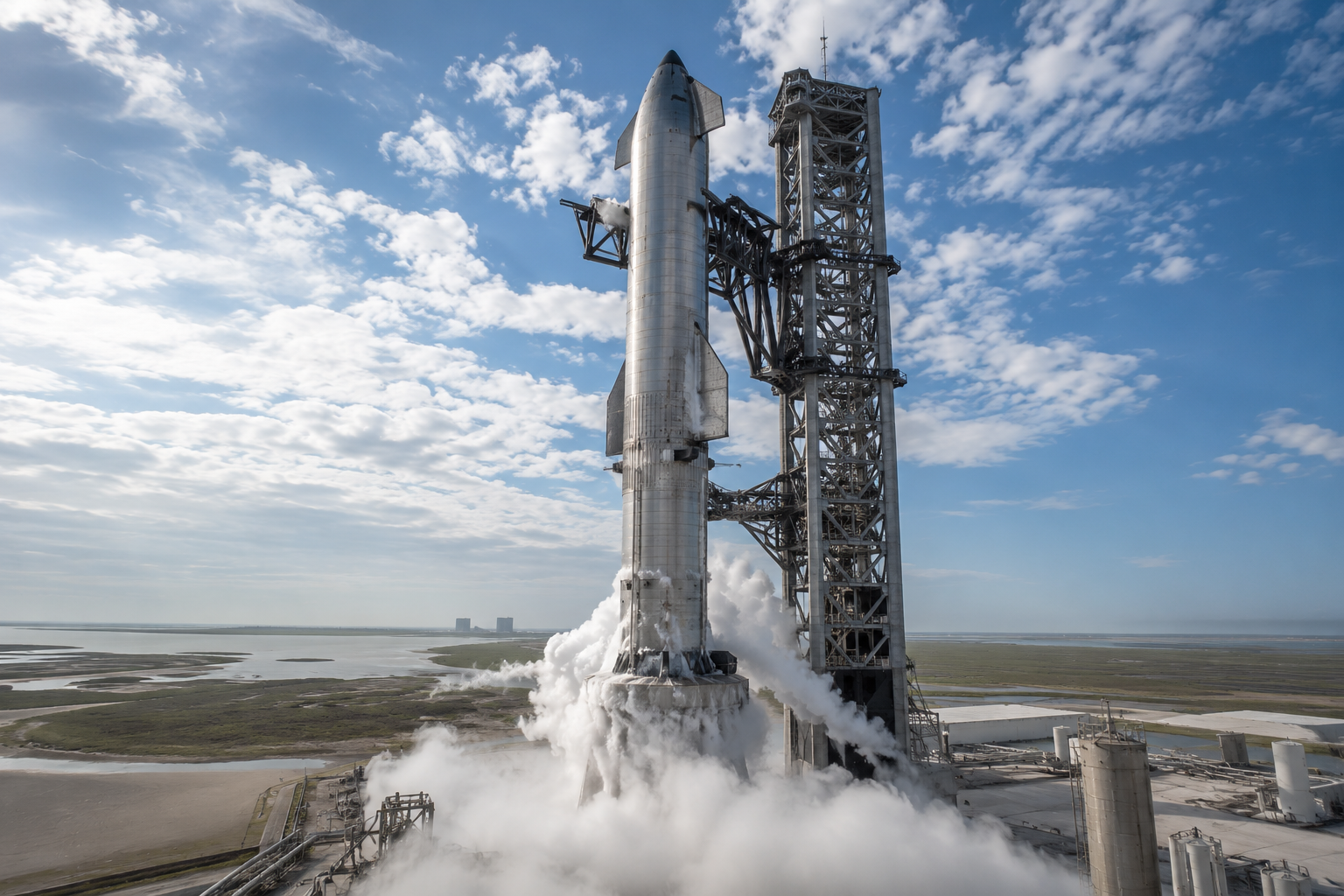
SpaceX has scrubbed the first launch attempt of its third-generation Starship rocket system from Starbase, with another launch attempt now expected on Friday.
The mission is viewed as a critical milestone for the company, not only because it is the first full test of the upgraded Starship V3 hardware, but also because it comes shortly after SpaceX reportedly filed for an IPO ahead of a potential public listing.
This would have been the 12th Starship test flight and the first since October 2025. During the intervening months, SpaceX focused heavily on developing and testing the third-generation design, although the programme has experienced setbacks, including a booster explosion during testing last November.
On Thursday, the company repeatedly delayed liftoff as engineers dealt with technical issues affecting both the rocket and launch infrastructure. The countdown eventually dropped below T-40 seconds before multiple recycle attempts forced the launch to be called off.
Elon Musk later said on X that a hydraulic pin securing the launch tower arm failed to retract properly. He added that another launch attempt could take place Friday evening if repairs are completed in time.
The new Starship V3 system introduces major upgrades across both vehicle and launchpad design. Improvements include redesigned third-generation Raptor engines delivering greater thrust in a more streamlined configuration, alongside changes intended to improve booster recovery and operational reliability.
SpaceX has also addressed persistent issues from earlier test flights, including propellant leaks inside sections of the upper-stage vehicle. The long-term objective remains full reusability for both booster and spacecraft, similar to the company’s Falcon 9 rocket system.
Even if the upcoming test succeeds, the mission will not complete all of SpaceX’s planned validation goals for Starship V3. Neither the booster nor the upper stage will be recovered, with both expected to perform controlled splashdowns — the booster in the Atlantic Ocean and Starship in the Indian Ocean.
The spacecraft also will not enter a full Earth orbit during this mission, meaning further flights will still be required before SpaceX can fully demonstrate Starship’s ability to carry commercial payloads into orbit.