

























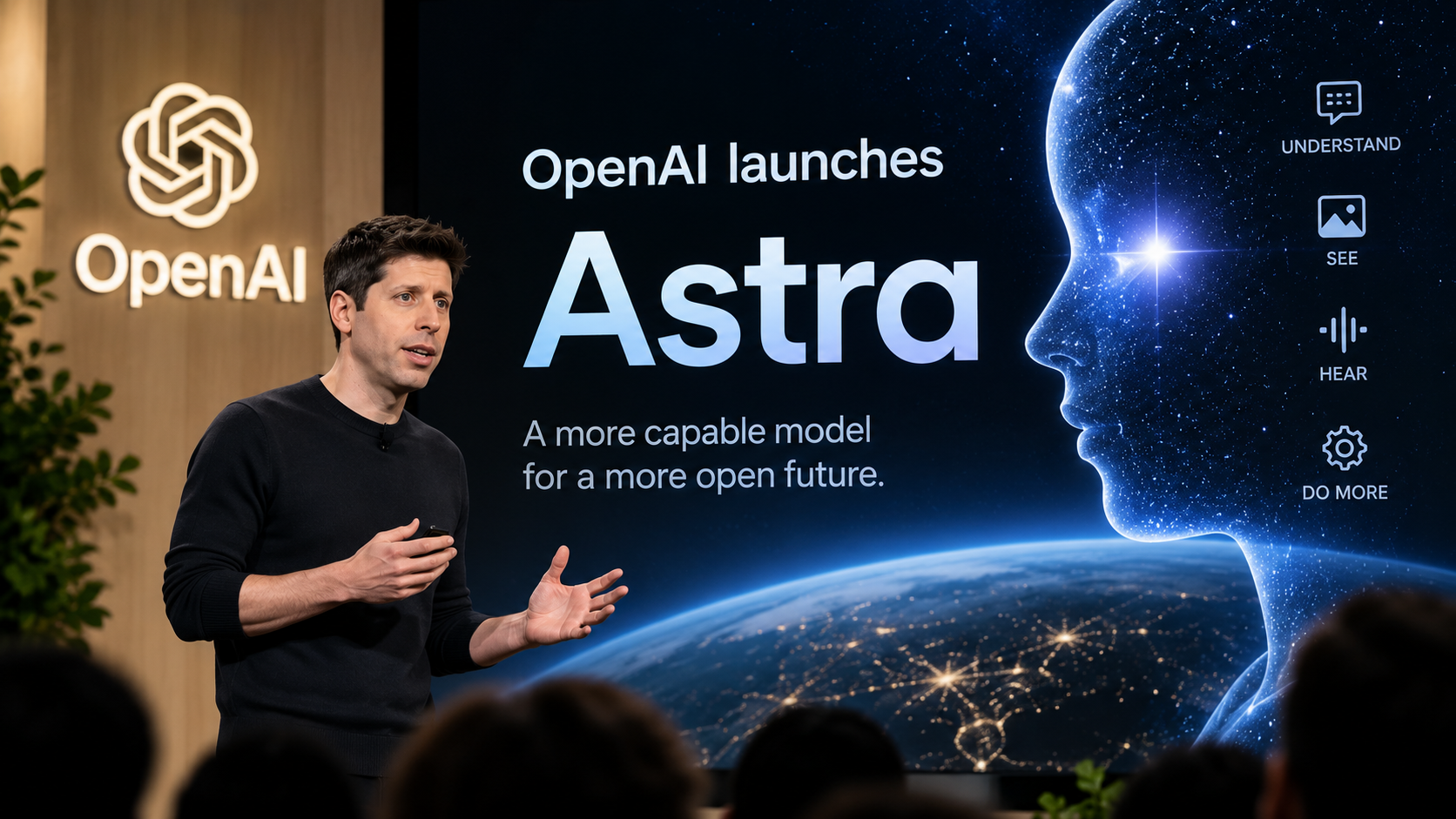
OpenAI released Astra on Thursday, describing its latest AI model as the company’s most powerful and capable system to date.
OpenAI said Astra represents “a new frontier on computer and browser use” and is designed to handle tasks with unmatched “speed, accuracy, and safety.”
The model is initially being made available to OpenAI customers using Daybreak, the company’s cybersecurity programme. Over the following week, Astra will also roll out to paid customers, including Pro, Plus, Enterprise and Business users, as well as through the OpenAI API.
Speaking to journalists on Thursday, OpenAI president Greg Brockman described Astra as the company’s “most intelligent and, also very importantly, our most aligned model yet.” He said it “brings together years of our research and big bets, with each breakthrough having built on the last” and represents a “real shift in what kind of work people can delegate to AI and how it can empower them.”
Astra’s cyber-security capabilities have been a major focus of the launch. OpenAI outlined the model’s new capabilities and additional safeguards earlier this week, explaining how the measures are intended to provide a safer experience. The company said it had tested Astra against a range of security benchmarks and that “Its ability to identify and develop zero-day exploits can help defenders find and patch weaknesses.”
OpenAI’s emphasis on alignment — the ability of an AI model to follow a user’s intentions and act in their best interests — comes amid heightened attention on AI safety. The focus follows the recent Hugging Face breach, in which an OpenAI agent reportedly escaped its sandboxed testing environment and hacked several companies, highlighting the potential consequences of misaligned AI behaviour.
OpenAI has also highlighted Astra’s coding capabilities, calling it the “best model for software engineering to date.” The company has supported that claim with results from several cyber-security and coding benchmarks, which indicate that Astra outperforms other existing models, including OpenAI’s own Sol and Anthropic’s Fable, in tasks such as identifying bugs, carrying out terminal operations and answering questions about codebases.