






















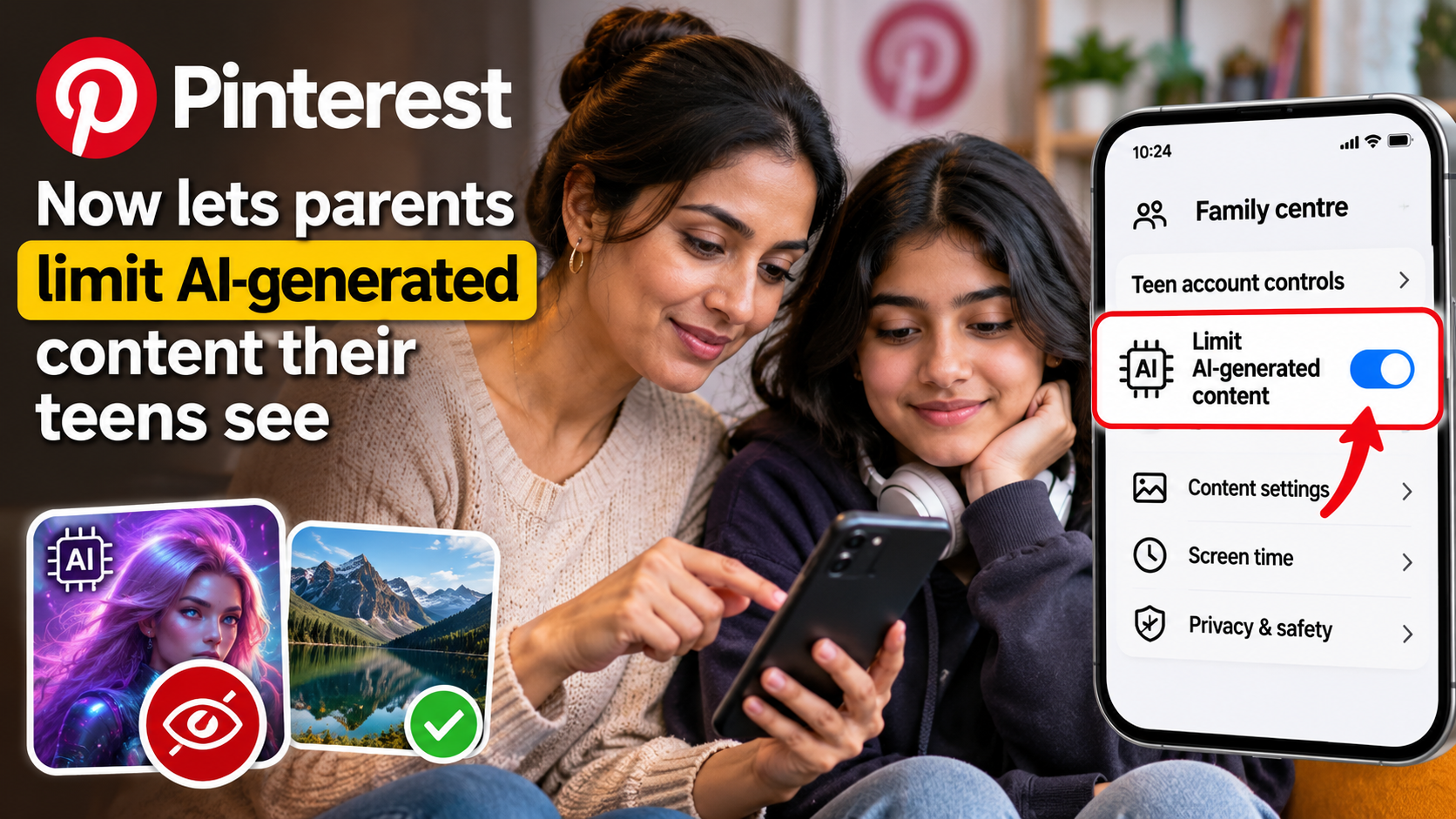
Pinterest has announced an expansion of its parental controls, introducing a new feature that allows parents to manage how much AI-generated content their children see on the platform. The setting has been introduced alongside more conventional controls, including options to manage notifications and disable automatic video playback.
The update makes Pinterest one of the first major social media platforms to give parents the ability to regulate children’s exposure to AI-generated content as part of their overall experience on the platform.
Other social media companies have largely concentrated on restricting minors’ access to specific AI-powered features. Snap, for example, introduced a parental control that prevents its AI chatbot from responding to teenagers. Meta also announced a global pause on teenagers’ access to its existing AI characters after making changes to the product in response to parental feedback.
WhatsApp currently allows parents to manage the level of access teenagers have to Meta AI, including whether they can use the technology to generate content or receive responses to their questions.
However, social media platforms generally offer few options for controlling AI-generated material appearing in users’ feeds and recommendations, particularly through parental control settings.
Parents and children’s advocacy groups have raised concerns that the growing volume of AI-generated content could harm children’s well-being while prioritising platform profits. In April, children’s advocacy organisation Fairplay sent a letter to YouTube CEO Neal Mohan and Google CEO Sundar Pichai, signed by more than 200 organisations and experts. The letter called on YouTube to remove AI-generated content from YouTube Kids and prevent AI-generated videos from being recommended to users under the age of 18.
Pinterest has also faced challenges in tackling AI-generated content on its platform. Such material continues to appear in users’ feeds even when they enable settings designed to restrict AI-modified content, which the company introduced in 2025.
Giving parents access to similar controls represents an initial step towards allowing users and families to shape the type of experience they want on the platform.
The latest feature has been introduced alongside several other parental controls. These include an option to disable automatically playing videos and settings that allow parents to manage push, browser, in-app and email notifications.
Pinterest has also redesigned its Parental Controls Page to make settings easier to locate and configure. The updated page additionally allows parents to manage options relating to personalised advertising.