























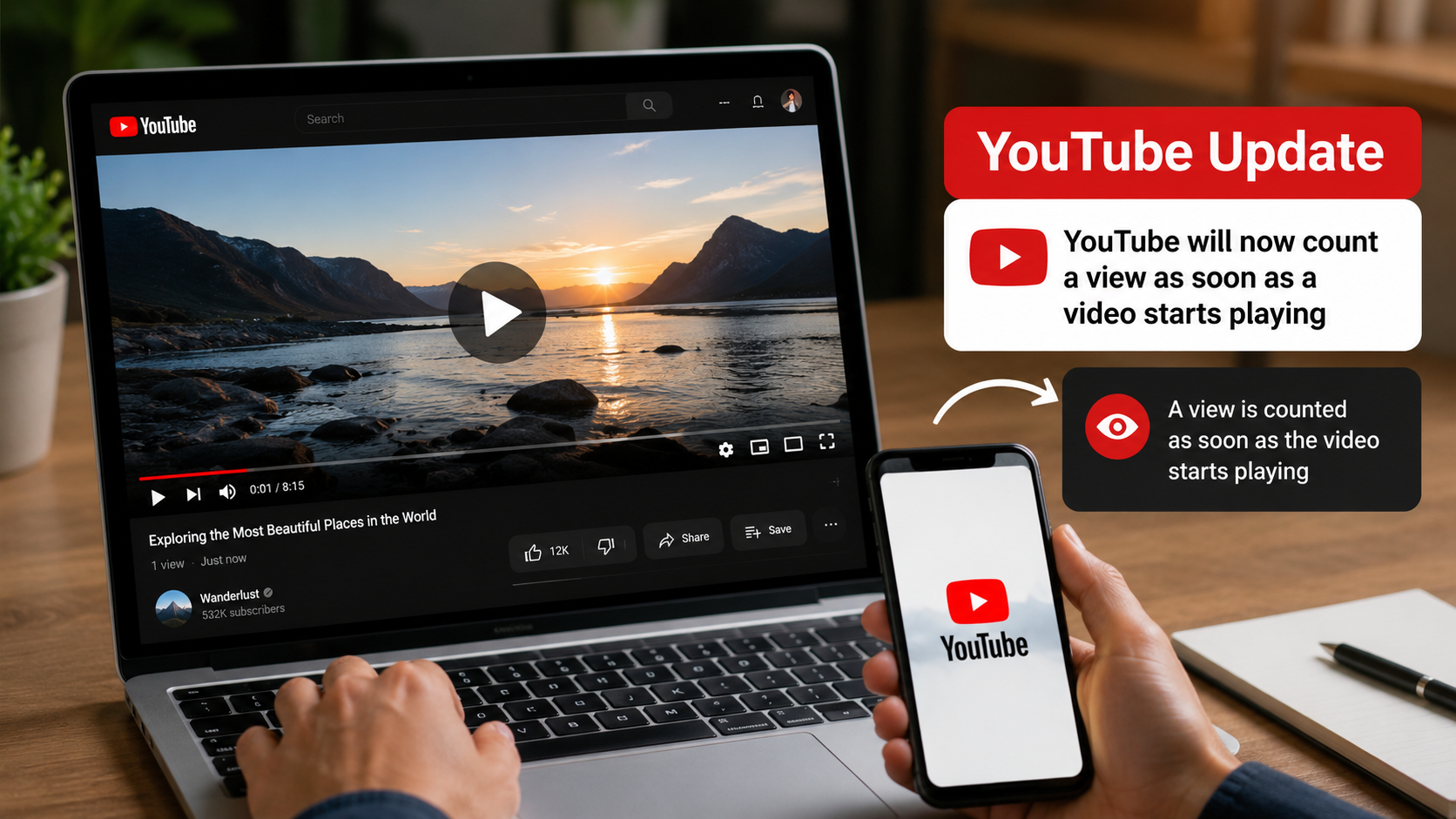
YouTube is changing the way it counts video views, with a view now recorded as soon as a video starts playing or a user joins a live broadcast.
The Google-owned platform has not previously disclosed exactly how it calculated views. However, it was generally understood that a view was recorded after someone watched at least 30 seconds of a video.
The change follows a similar update made to YouTube Shorts last year. Platforms such as TikTok and Instagram also count views from the moment a video begins playing.
“Historically, we’ve used multiple view counting systems across different formats,” the company wrote in a YouTube Community post. “However, we’ve heard that creators want to eliminate this metric confusion and accurately understand their true exposure, which is why we’re making this update.”
The new approach could significantly increase public view counts, particularly for videos that attract viewers only briefly. This could make the headline view figure less useful for creators and advertisers when assessing how popular a video is.
YouTube will continue to provide the previous view metric under the name “Engaged views”. Creators will be able to access this data through YouTube Analytics to see how many viewers continued watching their content.
The company said the change will not affect creator earnings or eligibility for monetisation through the YouTube Partner Program.
The new view-counting system will take effect on August 24. It comes shortly after YouTube announced higher monetisation thresholds for new creators, which will take effect next year.
Under the new requirements, creators seeking to earn money from ads and subscriptions will need at least 8,000 qualified watch hours during the previous year or 20 million qualified Shorts views within 90 days.
The current requirements are 1,000 subscribers plus either 4,000 watch hours over the previous year or 10 million Shorts views during a 90-day period. Creators must also maintain 10 million Shorts views over 90 days to earn revenue from Shorts.
The changes have drawn criticism from some users, who argue that the higher thresholds could make it more difficult for creators to enter and remain in YouTube’s monetisation programme.