

























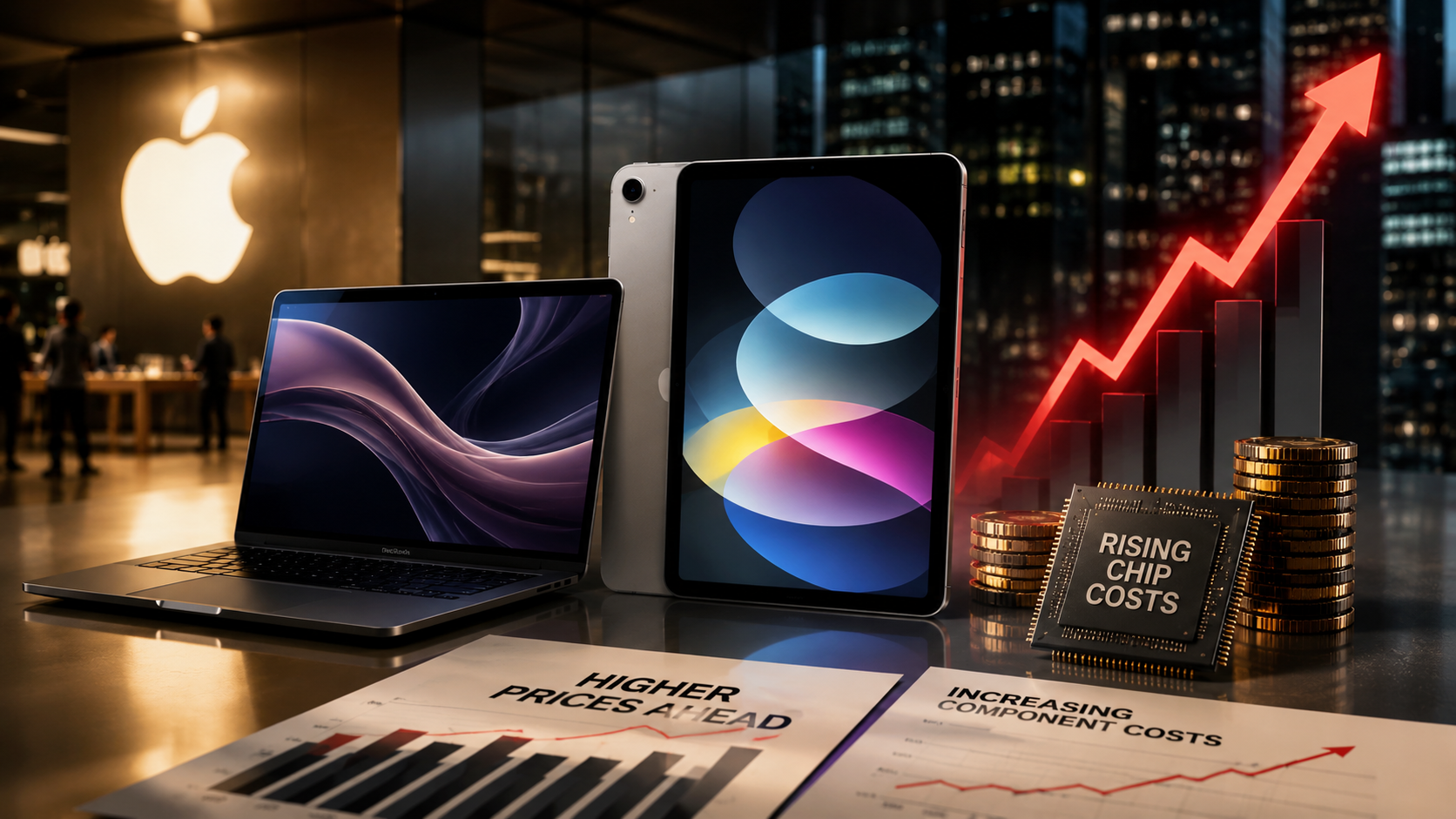
Apple has announced price increases for selected MacBooks and iPads worldwide as rising memory and storage chip costs continue to impact the consumer electronics industry.
The technology giant has raised prices on some laptop and tablet models by nearly 20%, citing an unprecedented surge in demand for memory and storage components driven by the rapid expansion of AI data centres.
Apple said the sharp rise in component costs has created significant challenges for manufacturers, describing the increase in chip prices as one of the fastest the company has experienced.
Although the latest price increases do not affect iPhones, industry analysts say the move highlights how the global AI boom is now having a direct impact on consumer technology products.
Apple joins a growing list of electronics manufacturers that have increased device prices to offset higher hardware and component costs.
Much of the cost pressure has been linked to soaring demand for memory chips, particularly RAM and storage components, as technology companies continue investing heavily in AI infrastructure and large-scale data centres.
Analysts say the surge in AI-related demand has disrupted the balance between supply and demand for semiconductor components, resulting in higher manufacturing costs across the technology sector.
Technology analyst Paolo Pescatore said Apple’s decision demonstrates that even the world’s largest technology companies are no longer insulated from rising component prices.
One of the affected products is the MacBook Pro with 1TB of storage, which has increased in price in the United States from $1,699 to $1,999.
In the UK, Apple’s entry-level Neo laptop has also risen from £599 to £699 only months after its launch.
Apple said it had previously absorbed much of the increased component costs but had now reached a point where price rises on selected iPad and Mac products had become necessary.
Counterpoint Research analyst David Naranjo expects other PC and tablet manufacturers to follow Apple’s lead by raising prices, reducing discounts on entry-level devices or shifting their focus towards higher-margin premium products.
Forrester analyst Dipanjan Chatterjee added that Apple’s strong brand loyalty is likely to help the company absorb the price increases with relatively limited resistance from customers.