
























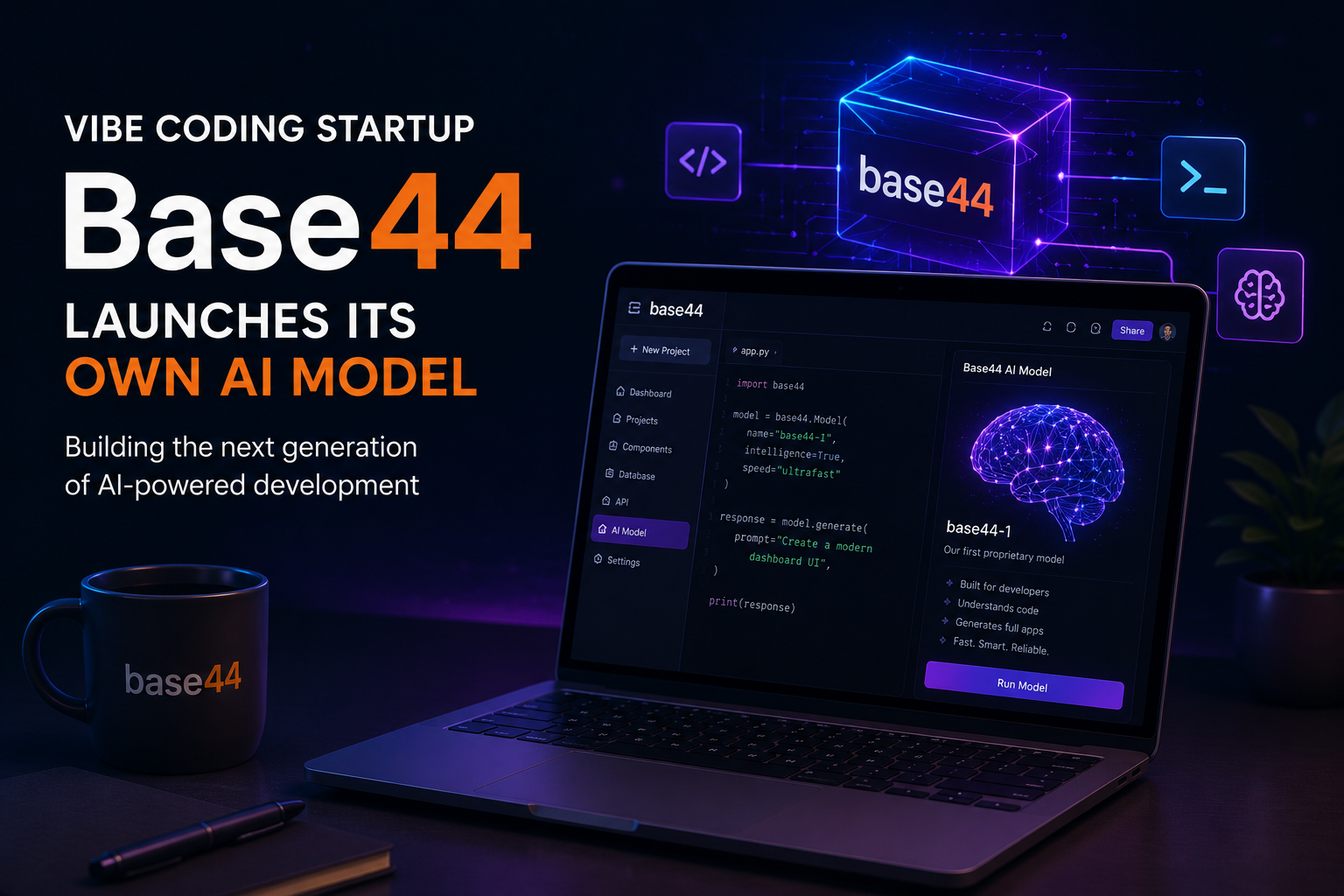
Base44, the AI-powered vibe-coding platform acquired by Wix for $80m just one year ago, has begun rolling out its own large language model (LLM) to help users build applications using natural language prompts.
The launch comes as AI companies increasingly debate whether relying on third-party frontier models is sustainable, with many startups looking to strengthen their long-term competitiveness by developing proprietary AI technology.
Base44’s new custom model, called Base1, is currently being introduced to users and is designed to improve application development while delivering lower latency, reduced operating costs and greater efficiency through tighter integration with the company’s platform.
Founder Maor Shlomo said owning both the model and the broader technology stack enables Base44 to optimise performance in ways that are difficult to achieve when relying solely on external AI providers.
The move could help Base44 differentiate itself from rivals such as Swedish startup Lovable, which continues to build its AI-powered coding platform using third-party language models.
However, Shlomo believes other established AI application companies are also likely to develop proprietary models as they accumulate sufficient user data and platform scale.
Industry experts say defensibility in AI increasingly depends on three factors: access to proprietary data, strong distribution channels and ownership of the underlying technology stack.
Base44 said the first version of Base1 has been trained using a dataset generated from tens of millions of real user interactions collected across its application development platform, providing specialised knowledge tailored to app creation.
As the platform continues to grow, the company expects its training data and model capabilities to improve further, although competitors are also rapidly expanding their own datasets and AI capabilities.
Base44 also faces increasing competition from frontier AI providers entering the AI coding market, including Anthropic’s Claude Code and xAI, whose growing developer ecosystems provide valuable feedback data to enhance future models.
Despite this, Shlomo believes specialist AI models focused on application development will continue to outperform more general-purpose models for many coding tasks.
Some industry analysts remain cautious about companies building proprietary foundation models, pointing to examples such as legal AI startup Harvey, which abandoned plans to train its own model in favour of using external AI systems.
Analysts also note that rising inference costs are encouraging businesses to adopt more specialised AI infrastructure, with enterprise customers increasingly seeking platforms that intelligently select the most suitable model for each task to reduce costs while maintaining high performance.